31 day money back guarantee Free shipping and free returns More than 88,000 unique rugs Since 1998: your expert for hand knotted oriental carpets

Arijana and Mamluk Rugs

Geometric Elegance

Those who look at a Mamluk carpet often do not realise that its roots extend back to the 15th century. In Cairo, the centre of the Mamluk dynasty, the first pieces were created at that time. Even these early examples stood out from all other hand-knotted Oriental carpets of their time. The geometric ornamentation of these carpets appeared strict, yet within it lay a harmony that was immediately noticeable. That is precisely what made them distinctive.

The geometric ornamentation of these carpets appears strict at first glance, but at the same time remarkably harmonious. It is this very contrast that makes them unmistakable and incomparable.

At some point, the Mamluk carpets found their way along the ancient trade routes to Afghanistan. There, they encountered families who had been knotting for generations. They adhered to the classic Mamluk patterns, of course. But they also introduced new elements: different colours, finer yarns, sometimes a modern touch. Thus, something unique was created. Something that preserves the old while still moving forward.

And to be honest: Such a hand-knotted Oriental carpet is much more than just a floor covering. Those who look longer feel it. It tells a story. Of balance. When one looks at the Mamluk patterns, one quickly thinks: there is more to it than just lines and ornaments. It somehow feels larger, almost as if it transcends the visible. Not merely a geometric play, but something that radiates harmony – difficult to explain, but immediately palpable. That is precisely what makes the fascination of the Mamluk patterns.

And therefore it holds true: These hand-knotted Oriental carpets do not merely adorn spaces. They transform them. A Mamluk carpet brings balance, creates atmosphere, and imparts a depth to the room that needs no explanation. And to be honest: Such a hand-knotted Oriental carpet always tells a story. Of balance. Of harmony. Of an order that feels greater than the pattern itself. They are carpets that fill a space with meaning.

Mamluk

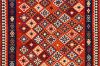
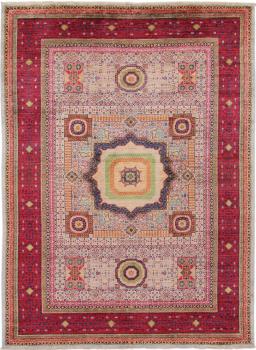
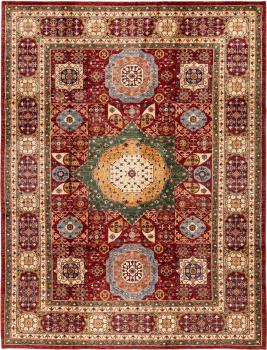
A classic Mamluk carpet is instantly recognisable.
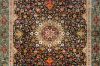
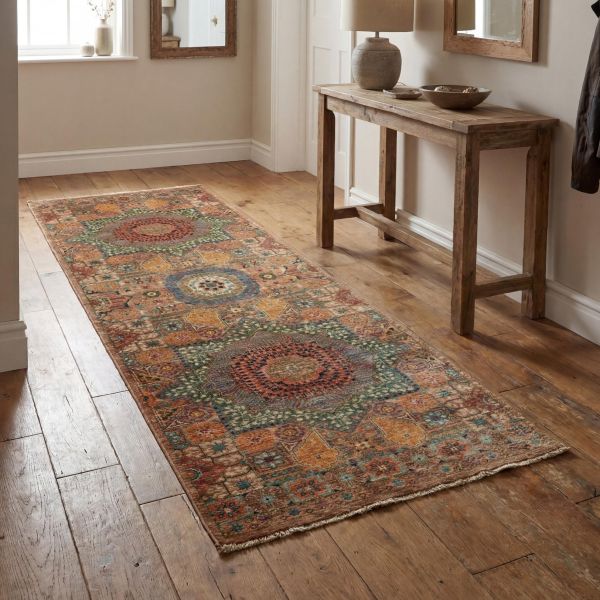
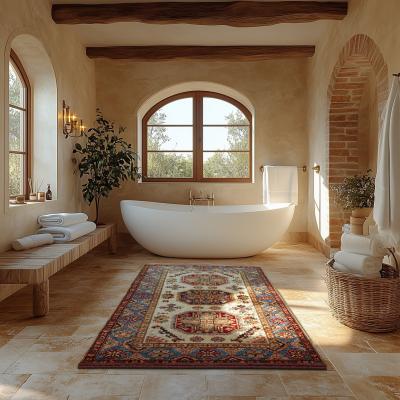
At the centre usually lies a star-shaped medallion, surrounded by a weave of circles, octagons, and small stars. This geometric ornamentation draws the eye to the centre and creates an almost meditative calm.

Traditionally, red and blue dominate, but the Afghan reinterpretations incorporate additional gradients. These shades make the patterns appear more three-dimensional and vibrant. Those who delve deeper discover new details: almost like a kaleidoscope of patterns that constantly change.

The production is purely handwork. With a high knot density and months of labour, hand-knotted oriental carpets are created that not only adorn spaces but also define them.

Arijana Klassik

The carpets of the series Arijana Klassik feel as if they have been transported directly from another era to us. Strict in order, clear in form, and yet they possess a warmth that one only gradually notices.

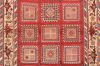
At the centre lies a large field, surrounded by several layers, almost like walls that build up. Those who look longer will discover new details: tiny stars, fine lines, recurring ornaments. It is this geometric ornamentation that immediately evokes classic Mamluk patterns.

The colour scheme appears understated yet strong. Deep red, vibrant blue, along with bright accents that bring the whole to life. It has a regal, timeless quality.

The craftsmanship also deserves respect. These Arijana carpets are among the most precise hand-knotted Oriental rugs one can find. Over the years, they even change. The natural colours darken, and a patina develops.

Those who choose Arijana Klassik are not just acquiring a carpet. It is more like a piece of history that enters the room.

Design Arijana

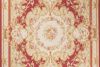
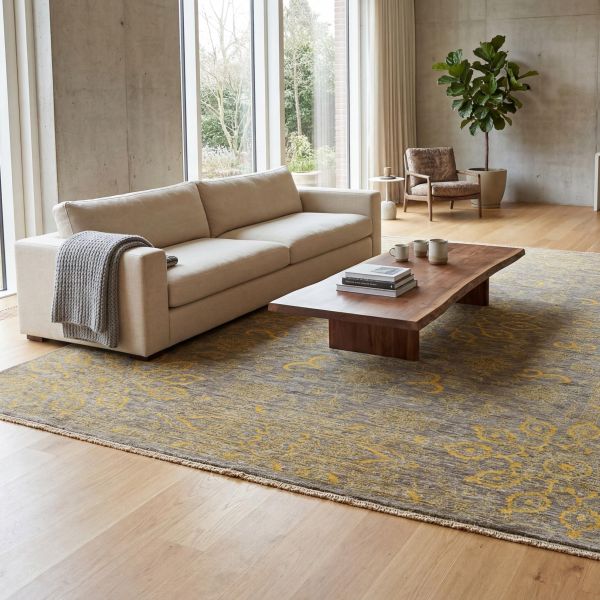
With Design Arijana , the journey takes a different direction. You can recognise the roots, the old Mamluk patterns, yet these rugs look different. More reduced, clearer. Sometimes it almost appears minimalist.

Instead of many ornaments, often only one motif remains in focus. Perhaps a medallion. Or a tree of life. Everything else recedes, and therein lies the effect.

The colours?
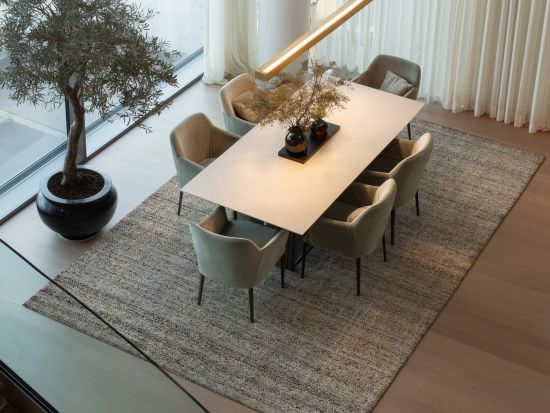
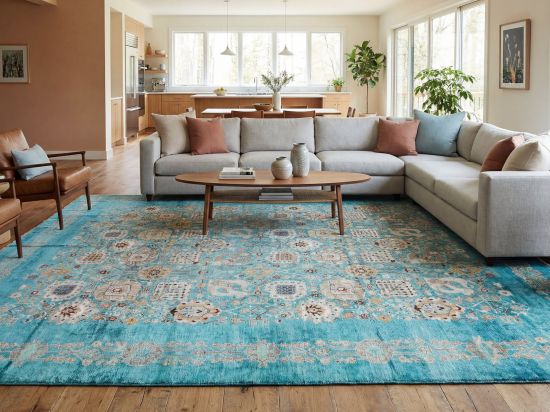
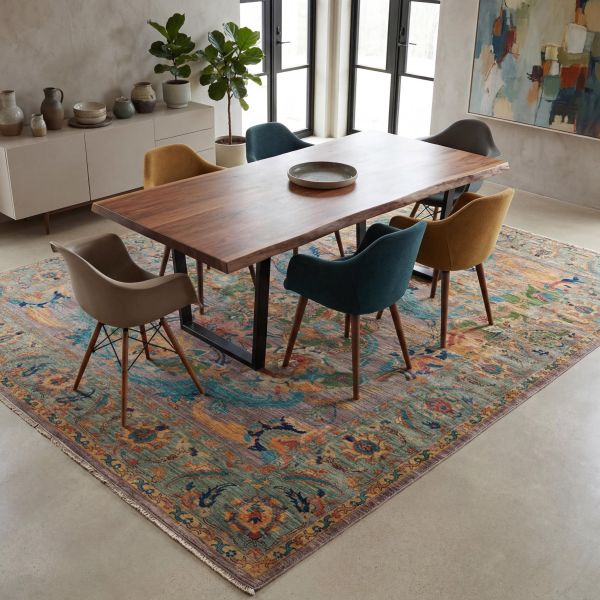
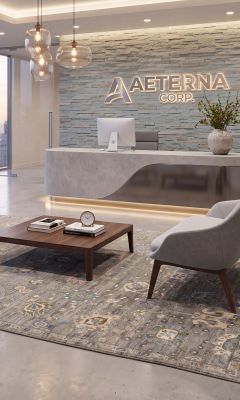
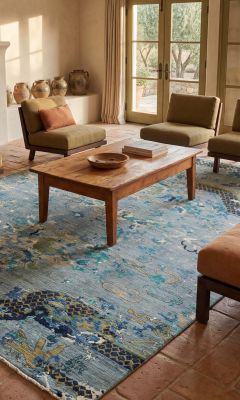
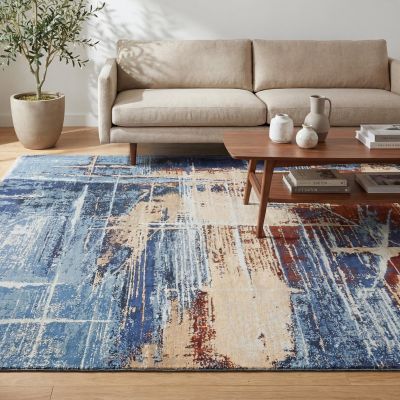
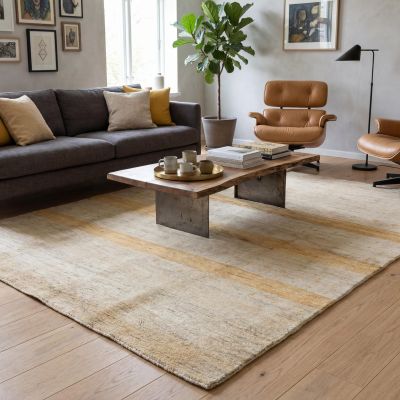
No longer just the typical red and blue. Here, grey, beige, and soft tones also emerge. Popular are the gradients that bring depth and make the patterns appear less strict. Modern, then: suitable for a loft, but equally fitting in clean architecture. And yet: the connection to the geometric ornamentation of the past remains palpable.

Of course, these pieces are also genuine hand-knotted Oriental rugs. Knot by knot, crafted over weeks or months. And as with all good rugs, it holds true: with the years, they become more beautiful, not older.

That’s why a Design Arijana fits into many spaces. Sometimes it feels familiar, sometimes fresh. But it always brings a piece of the past with it.

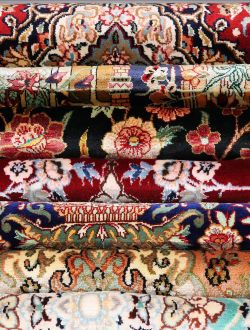
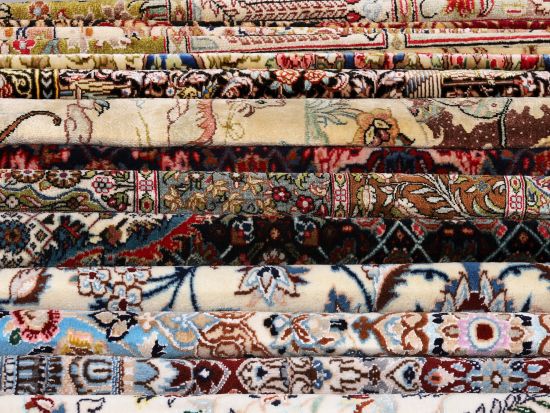
Close-up of a folded hand-knotted Oriental rug with traditional patterns.
Arijana Bakhtiarii
287 x 189

£2,436

Arijana Bakhtiari

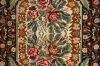
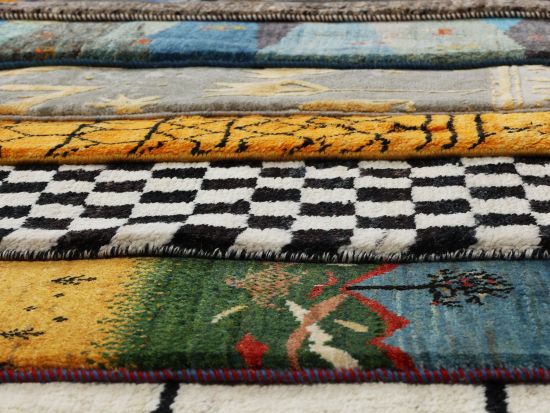
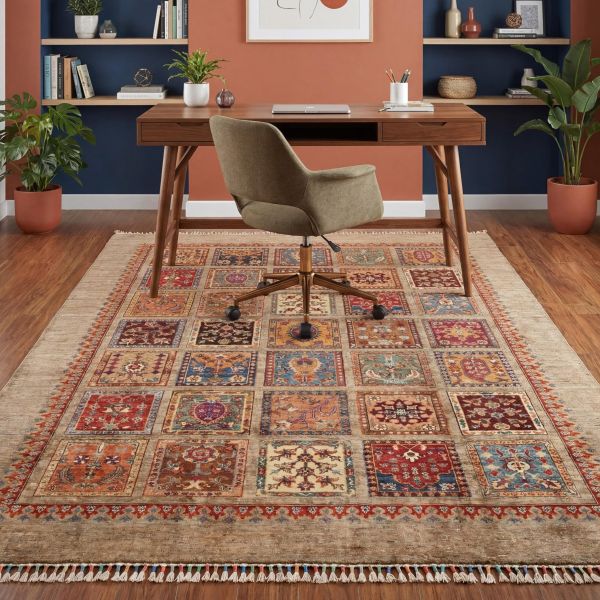
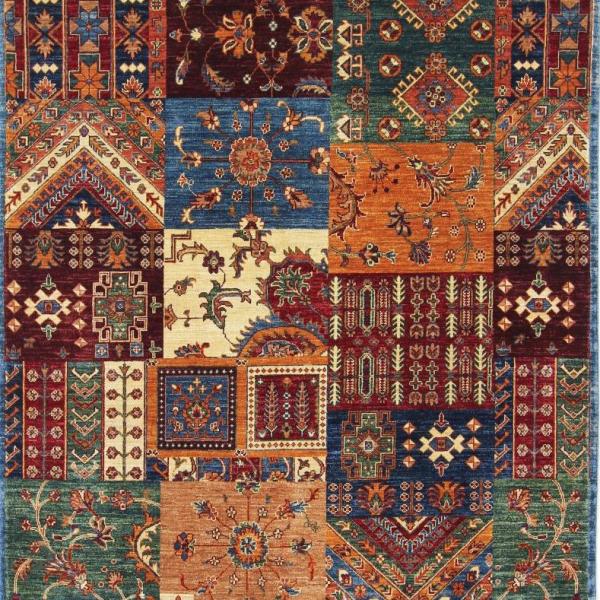
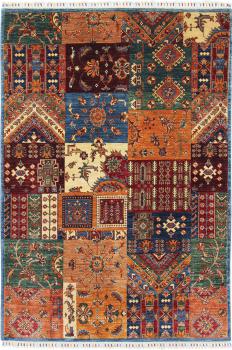
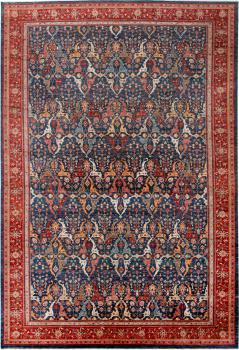
The carpets from the Arijana Bakhtiari collection evoke the feeling of stepping into a garden. Small fields side by side, each with a different motif: flowers, trees, vines. A colourful mosaic, lively and playful.

The colours are vibrant. Red, green, white, and sometimes gentle gradients create transitions that almost resemble a picture in constant change. One could say: almost like a kaleidoscope pattern that reassembles with each glance.

Even though the patterns are playful, there is still a connection to tradition. Amidst all the flowers and vines, a hint of geometric ornamentation occasionally flashes, a reminder of the ancient Mamluk patterns that serve as the origin.

Naturally, the Arijana Bakhtiari pieces are also hand-knotted, one by one. They are genuine hand-knotted Oriental rugs, where every detail is crafted with patience. Those who look closely will notice tiny leaves and flowers, worked with remarkable precision.

Such a carpet brings nature into the home.

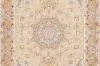
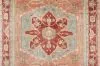
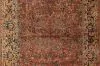
Close-up of a hand-knotted Ziegler carpet with traditional border and floral ornaments

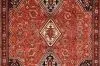
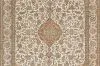
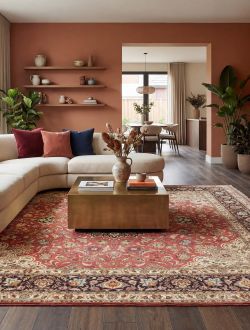
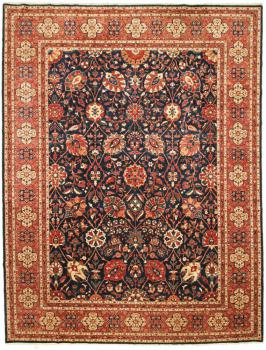
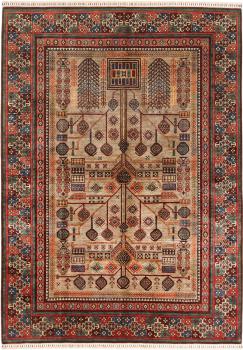
Overall view of a classic Ziegler carpet with a tree of life motif

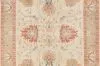
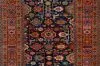
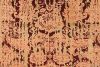
Central section of a Ziegler carpet with a symmetrical tree of life motif.

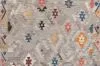
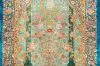
Close-up of a Ziegler rug with woven diamond patterns and fringe finish.

Care tips

A good carpet often accompanies one for a lifetime, provided it is treated properly. This is particularly true for hand-knotted oriental carpets, such as Mamluk carpets or the various lines of Arijana carpets, where maintenance is crucial.
The most important factor is regularity. Regularly vacuuming the carpet prevents dust and dirt from settling deep into the knots. It is best to do this without a brush attachment, as this could roughen the fine fibres over time.

Direct sunlight should also be avoided as much as possible. While a carpet with natural colour gradients is beautiful, too much light will eventually cause the colours to fade. And what if an accident occurs? In that case, the rule is to react quickly. A glass tips over, a stain appears.

Immediately take a clean cloth, lightly dampen it, and dab. Do not rub, as this will only push the dirt deeper into the wool.
Every few years, it is also worthwhile to have the carpet professionally cleaned. A gentle wash refreshes the colours, removes deeply embedded dust, and almost restores the carpet to the brilliance it had on the first day. This helps preserve its beauty – and the carpet will only grow more integrated into the room over the years.

Meaning of the patterns

When you look at a carpet for a long time, you quickly notice: every line seems to be intentionally placed, every shape carries something within it. Strict? Yes. But within this geometric ornamentation lies also a sense of calm.
Then there are the playful details. Sometimes they resemble a kaleidoscope of patterns. Sometimes still, sometimes in motion. This speaks of diversity, of change, of life itself.

And with the Arijana carpets, it is often nature that becomes visible. Flowers, tendrils, small trees. This represents growth, fertility, a closeness to the earth. Not coincidence, but symbolism that you can feel immediately.

In the end, there is always the craftsmanship. Each of these carpets is a unique piece. Quietly and patiently made. And if you look closely, they tell their own story, not directly, but rather softly. Yet clear enough that you can feel it.

Close-up view of a handmade patchwork rug with oriental patterns.

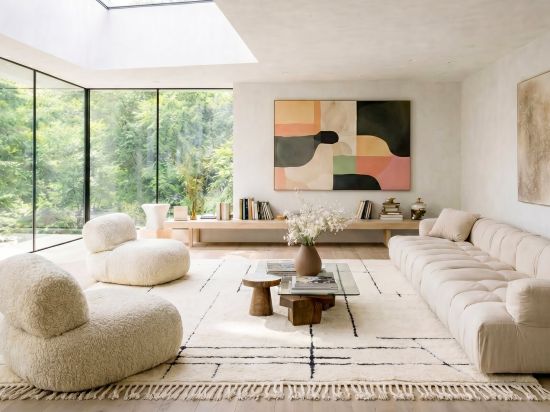
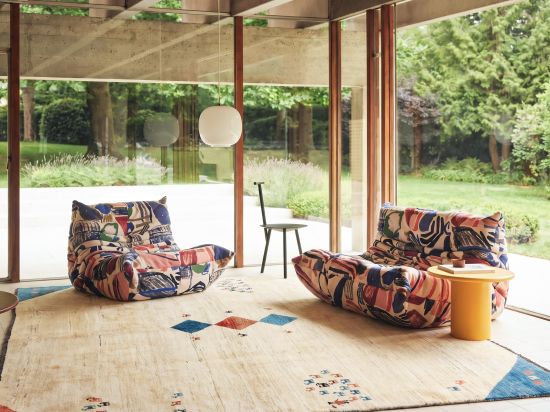
Interior styles in focus: Boho and Ethno look with Arijana & Mamluk

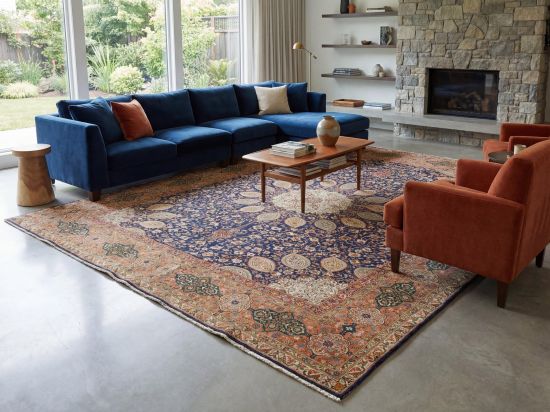
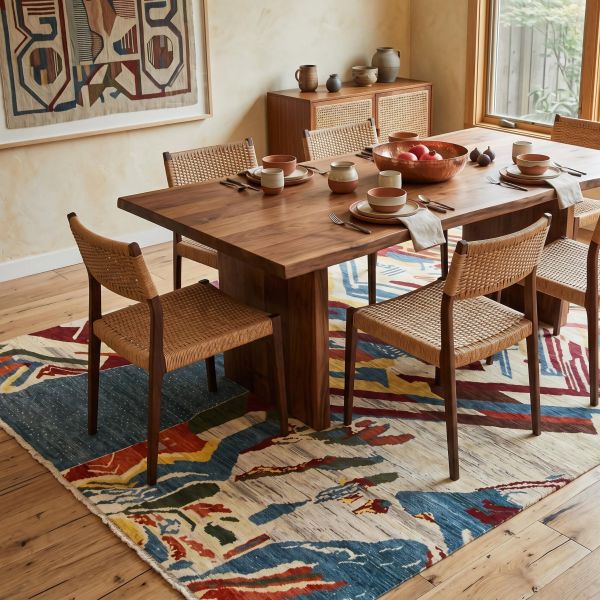
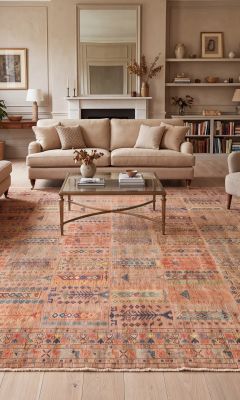
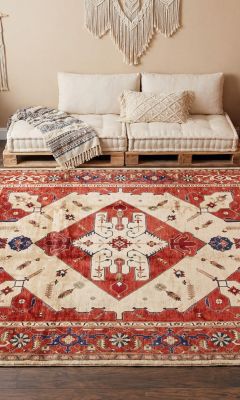
In a Boho setting, an Arijana rug fits in perfectly. Boho isn't very strict. It brings together a variety of colours, patterns, fabrics, and little details. An Arijana, with its warm tones and delicate patterns, doesn't get lost in this mix; it simply blends in.

The Ethno style is different. It tends to be a bit calmer: wood, cotton, natural colours, that sort of thing. A Mamluk rug fits better here because it has clear, geometric patterns and doesn't appear overly whimsical. The colours are often more muted, which suits this style well. Nevertheless, it still adds warmth.
In the end, whether Boho or Ethno, a rug makes all the difference. Without one, something is missing.

With one of these hand-knotted carpets...

Bring not only a piece of tradition into your home but also a work of art that impresses with its uniqueness and quality. The soft texture and natural appearance create a warm and inviting atmosphere that makes you forget everyday stress and creates an oasis of calm and harmony.