Choosing the right rug size is crucial to the overall look and feel of a room. A rug can visually tie a living area together, clearly define a dining space, or add extra comfort in the bedroom. However, if it is too small or placed incorrectly, the room can quickly feel unsettled, unbalanced, or unfinished.
If you want to find the right rug size, you should always base your choice on the furniture, the function of the room, and the effect you want to achieve. Different rules apply in the living room than in the dining room, bedroom, or kitchen. That is exactly why it is worth choosing your rug size not just by eye, but according to clear criteria.
As a rule of thumb: A rug should always be chosen to suit the specific living area and be large enough to visually connect the furniture. So, the most suitable rug size always depends on where the rug will be placed and what function it is meant to serve in the room.
In this guide, you will learn step by step how to choose the right rug size, which dimensions work best for different rooms, and which common mistakes you should avoid.
The right rug size depends greatly on the room in question and the placement of the furniture. The overview below helps you quickly find the right size for your living space.
| Room | Minimum size | Ideal size | Important rule |
|---|---|---|---|
| Living room | 160 × 230 cm | 200 × 300 cm or larger | The rug should sit under the entire seating area or at least include the front legs of the sofa |
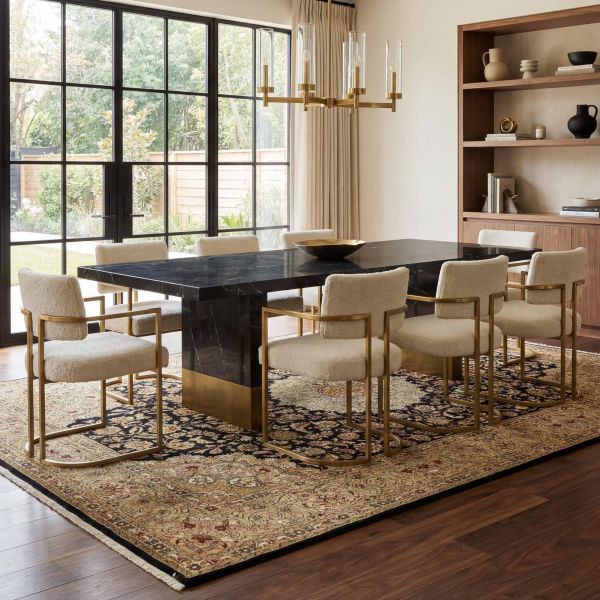
| Dining room | Table size + 60 cm | Table size + 70–80 cm | Chairs must remain fully on the rug even when pulled out |
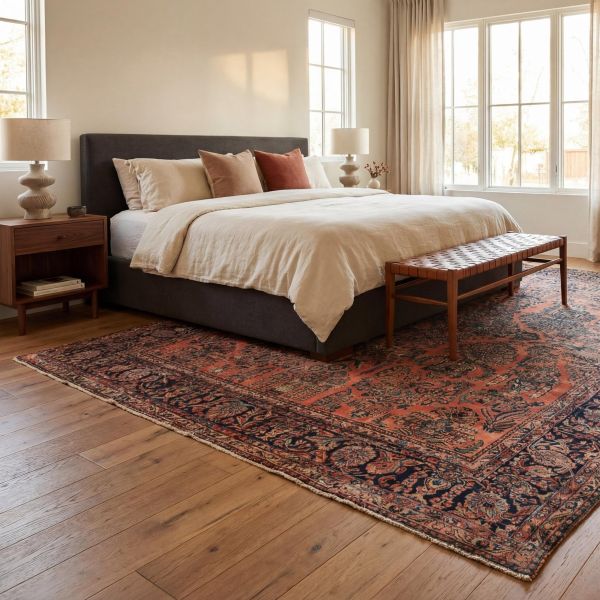
| Bedroom | 160 × 230 cm | 200 × 300 cm or larger | At least 50–70 cm of the rug should be visible on each side |
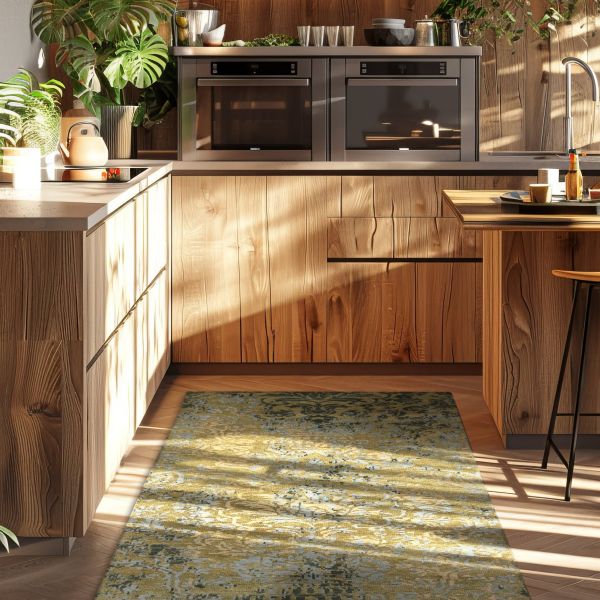
| Kitchen | 60 × 180 cm | 80 × 250 cm | The rug should follow the main walkways |
| Bathroom | 50 × 80 cm | 60 × 120 cm | The rug should cover the standing area in front of the sink or shower |
Tip: If you are unsure, it is better to choose a larger rug size. Rugs that are too small often make rooms feel unsettled and unbalanced.
The right rug size should never look chosen at random. To ensure a rug fits harmoniously into the room, you should take a systematic approach. What matters is not only the rug’s dimensions, but above all the area you want to style, the rug’s function, and its placement in relation to the furniture.
Before choosing a rug size, you should first decide which area of the room is the main focal point. In most cases, this is not the entire room, but a clearly defined zone such as the seating area in the living room, the dining area, the bed in the bedroom, or a walkway in the kitchen and hallway.
The rug size should always be based on this area. This creates a harmonious overall look, and the rug serves not only a decorative purpose but also helps to define the space.
In the next step, you should consider what role the rug is meant to play in the room. Do you want to visually tie an area together, bring individual pieces of furniture into one scheme, create a cosier feel, or clearly define different zones within the room? Depending on its purpose, the ideal rug size will also vary.
A large rug usually creates a sense of calm and spaciousness because it visually connects the furniture. A smaller model, on the other hand, can be used to add specific accents, but it should still always be in proportion to the furnishings.
A particularly important point is the question of how the rug should be positioned under or in front of the furniture. In the living room, for example, a rug can sit beneath the entire seating area or just accommodate the front legs of the sofa and armchairs. In the dining room, it should be large enough so that even when the chairs are pulled out, they remain on the rug. In the bedroom, the rug can either lie completely under the bed or only be visible in the lower section.
The desired placement therefore directly determines which dimensions make sense. The more the rug incorporates the furniture, the more harmonious and high-quality the room will generally appear.
Once the area, function and placement have been decided, you should check the proportions in the room. A rug should never look lost, but it should not be so large that the room appears overcrowded either. It is important that enough flooring remains visible at the sides and around the edges, and that the rug fits naturally into the overall room design.
Particularly in smaller rooms, a rug that is too small is often chosen out of caution. However, this frequently makes the room feel unsettled. In many cases, a slightly larger rug size is the better choice.
You should only decide on the exact size at the final stage. If you use the area of the room, function, furniture placement and proportions as your guide, it becomes much easier to determine the right rug size. This helps you avoid common mistakes and ensures that the rug enhances the room visually rather than disrupting it.
Rule of thumb: It is not the empty floor that determines the rug size, but always the area that the rug is meant to visually connect or highlight.
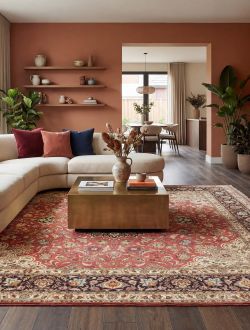
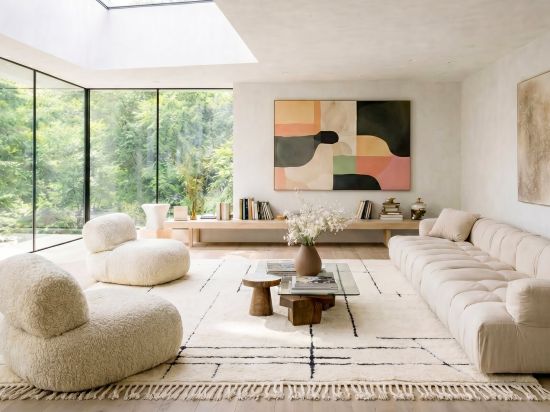
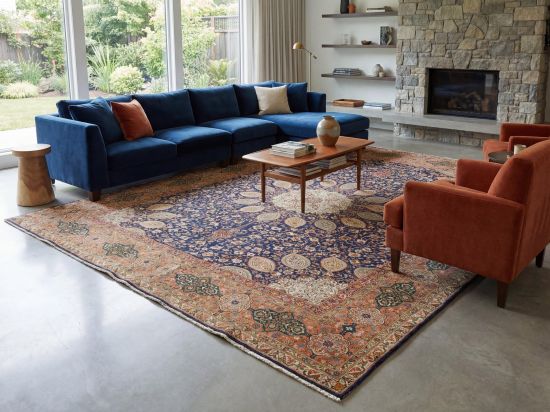
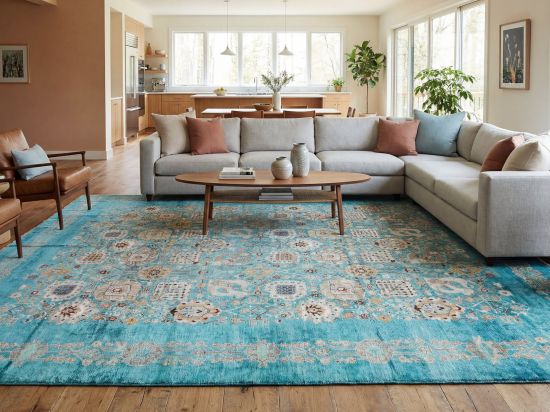
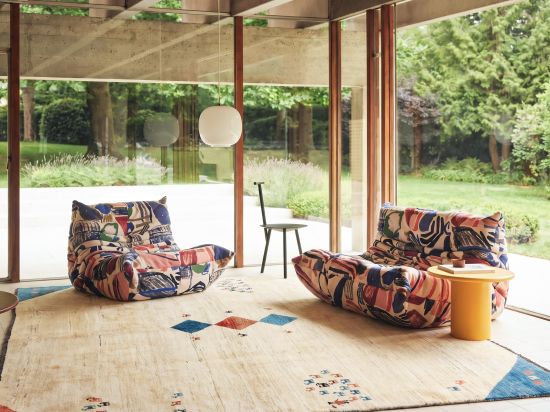
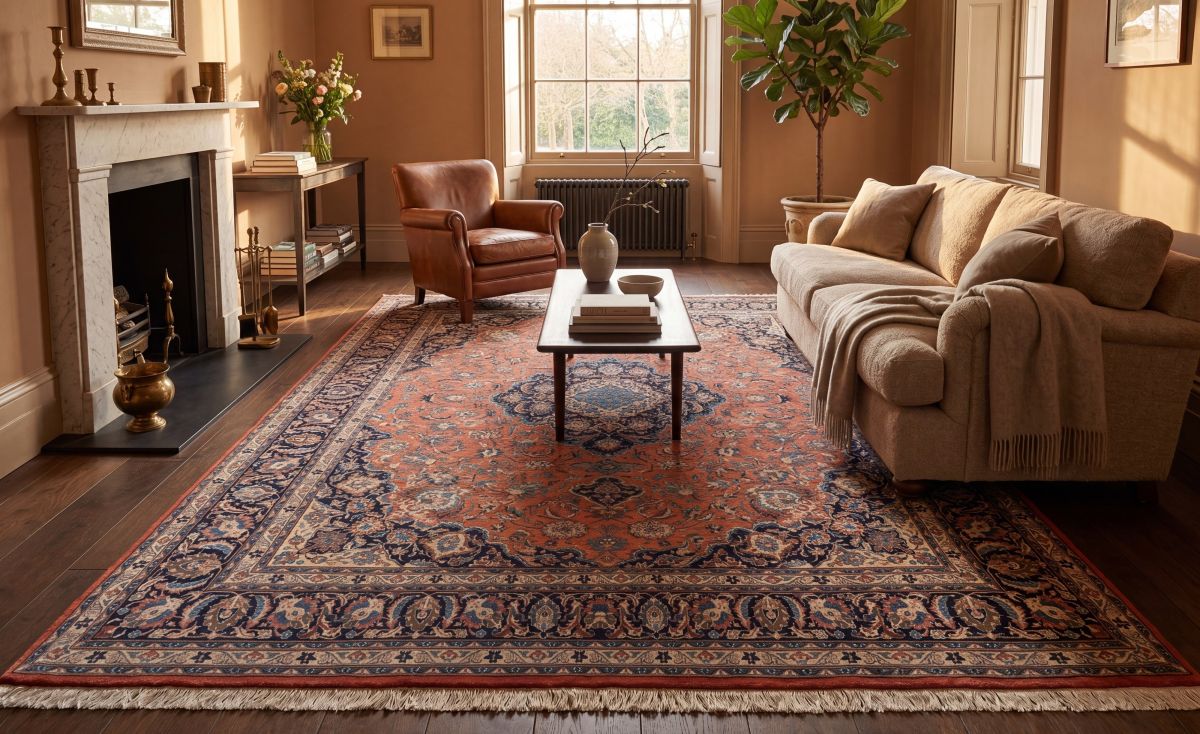
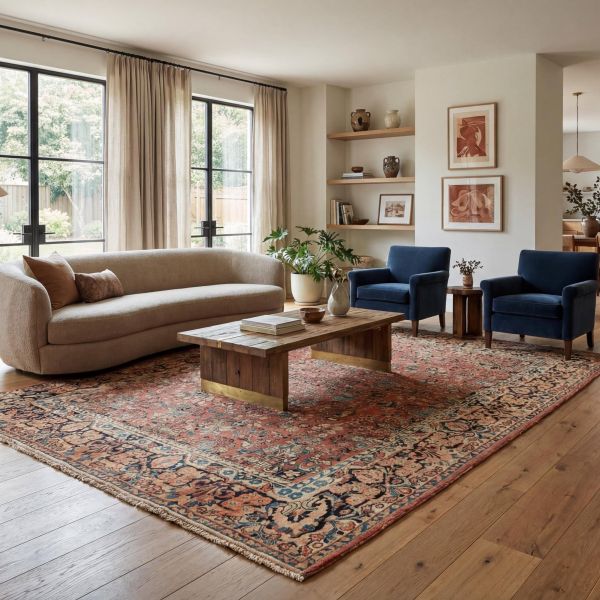
In the living room, the rug size should always be based on the seating area, not just the coffee table or an empty area in the room. A rug visually ties the sofa, armchairs and table together, helping the living area feel harmonious, calm and refined.
To achieve this, the rug should be chosen large enough. A living room rug looks particularly well balanced when it sits beneath the entire seating area or at least under the front legs of the sofa and armchairs. This creates a clearly defined living space that feels visually cohesive.
The ideal rug size for the living room depends on the size of your seating area and how prominent you want the rug to appear in the room. For smaller living spaces, sizes such as 160 × 230 cm are often a good starting point. In many cases, however, 200 × 300 cm or 250 × 350 cm look far more balanced, as they cover more floor space and tie the furniture together more effectively.
If there is enough space, a larger rug is almost always the better choice. Rugs that are too small can quickly make the room feel unsettled and disrupt the visual connection between the furniture.
Ideally, all the key pieces of furniture in the seating area should sit on the rug. This option creates a particularly spacious and premium look. Alternatively, the rug can be positioned so that at least the front legs of the sofa and armchairs stand on it. This also creates a clear connection between the furniture and is an especially good solution in smaller living rooms.
What you should avoid, however, is a rug that sits only under the coffee table. This placement usually looks lost and makes the rug appear too small. As a result, the living area feels less well considered and often looks smaller too.
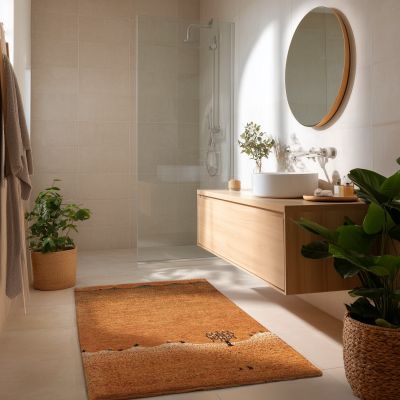
In the bathroom, rugs are used strategically to increase comfort and highlight specific areas. The right rug size ensures that the areas you stand on are comfortable to use without making the room feel cluttered.
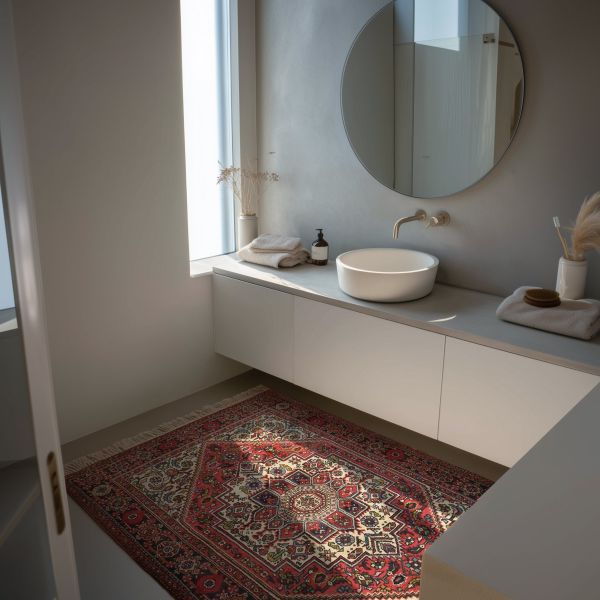
Typical positions are in front of the washbasin, next to the shower or in front of the bathtub. Here, it is important that the rug fully covers the area where you stand.
Unlike in other rooms, smaller rugs are usually used in the bathroom. They should be carefully matched to the specific area and provide enough coverage without looking too dominant.
In the bathroom, choosing the right rug is mainly about functionality and material. Unlike in living or dining rooms, rugs here are regularly exposed to moisture. That is why they should not only look attractive, but also dry quickly, be easy to care for and offer a non-slip surface.
Rugs that are specifically designed for more humid rooms are particularly suitable, as are those whose structure and materials can withstand the daily demands of the bathroom. At the same time, they can be used to bring warmth and comfort into the room.
Used in smaller sizes, Loribaft rugs provide a pleasant underfoot feel while also bringing warmth to the room. It is important to place them in well-ventilated areas so that they can dry quickly after coming into contact with moisture.
In the dining room, functionality is the main priority. The right rug size ensures the dining area is clearly defined while remaining practical for everyday use. A rug that is too small can quickly become inconvenient, as chairs may no longer sit fully on the rug when pulled out.
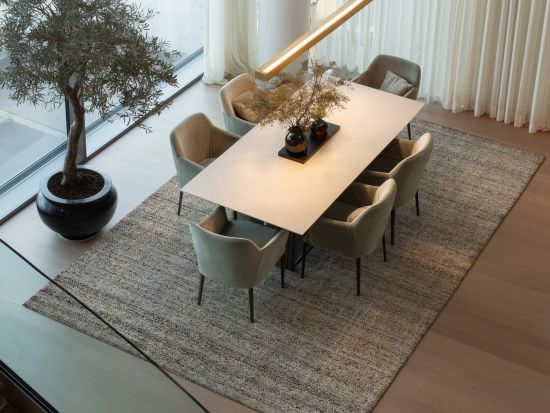
To create a harmonious look and ensure the dining area is comfortable to use, the rug should always be noticeably larger than the dining table. This creates a cohesive surface that visually ties the table and chairs together.
The most important rule in the dining room is: the rug should be at least 70 to 80 cm larger than the table on all sides. This ensures that all chair legs remain on the rug, even when the chairs are pulled back.
If the rug is too small, the chairs can easily tip when moved or catch on the edge of the rug. This is not only impractical, but also disrupts the overall look of the room.
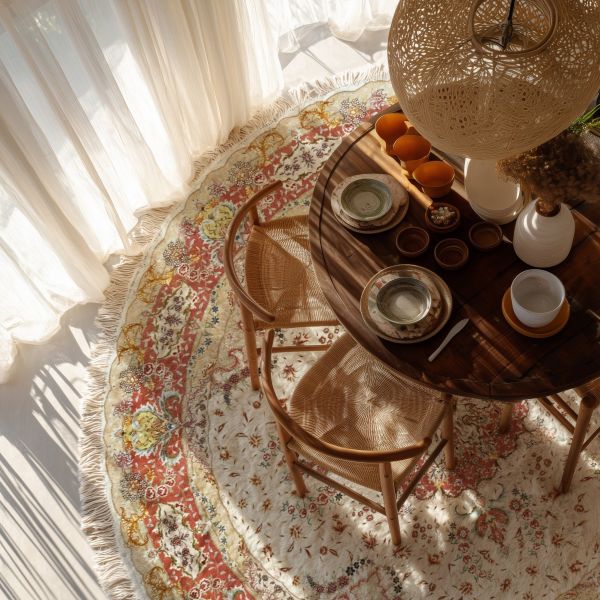
For a harmonious overall look, the shape of the rug should always match the shape of the dining table. A rectangular table looks most balanced on a rectangular rug, while round tables are ideally paired with round rugs. This coordination brings calm and clarity to the room.
As well as the right size, choosing the right rug for the dining room also plays an important role. As this area is used every day, the rug should not only look good but also be practical. Depending on the shape of the dining table, the interior style and how the space is used, different types of rug may be particularly suitable. It is important that the rug complements the dining area harmoniously while also standing up to the demands of everyday life.
Round rugs are the ideal choice for round dining tables. They create a harmonious overall look and make the dining area feel particularly balanced. Their shape creates a soft, flowing sense of space and makes them especially suitable for smaller or modern dining rooms.
In the bedroom, rug size plays an important role in comfort and atmosphere. A rug not only adds warmth and cosiness, but also influences how harmonious and balanced the room feels. It makes a big difference, especially when getting out of bed, whether you step onto a soft rug or a cold floor.
The right rug size should always be based on the bed, as it is the central piece of furniture in the room. The aim is to visually frame the sleeping area while also providing enough surface space beside the bed.
A tried-and-tested solution is to choose the rug so that it is visible at the sides and at the foot of the bed. Ideally, at least 50 to 70 cm of rug should remain exposed on both sides. This creates a pleasant underfoot feel and makes the room look calmer and more structured at the same time.
Depending on the size of the room and the effect you want to achieve, there are various ways to position the rug in the bedroom.
In the bedroom, comfort is the main priority. Alongside the right size, choosing the right rug also plays an important role, as it provides a pleasant underfoot feel every day. Soft, warm and understated designs are particularly well suited here, helping to create a relaxed and cosy atmosphere. Depending on your interior style and personal taste, different types of rug can perfectly complement the sleeping area.
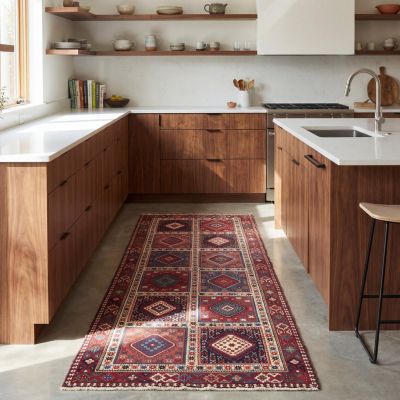
In the kitchen, functionality is the main priority. Rugs are used specifically in areas where you often stand or move around. The right rug size should therefore always be based on walkways and work areas.
Typical placements include in front of the worktop, between the kitchen island and the kitchen units, or along walkways. Narrow runners are particularly popular, as they fit perfectly into long kitchens while also providing greater comfort.
The rug size should be chosen so that there is enough standing space without disrupting the flow of movement. A rug should complement the area sensibly, but not get in the way.
The wrong rug size is one of the most common reasons why a room feels unsettled or unbalanced. Often, this is not down to the rug’s design, but to its proportions and placement in the room. If you know the typical mistakes, you can avoid them and noticeably improve the overall look of your interior.
The most common mistake is choosing a rug that is too small. Many people deliberately go for a smaller size to save space or avoid overcrowding the room. In practice, however, this often makes the rug look lost and prevents the furniture from feeling visually connected.
Better: It is usually better to choose a slightly larger rug so that it clearly defines the area and ties the space together visually.
A rug should always relate to the furniture and not simply be placed somewhere in the room. If the rug sits separately from the sofa, table or bed, the room can quickly feel unstructured.
Better: Use furniture such as the sofa, dining table or bed as the starting point when deciding on the rug size.
A rug may be large, but it can still look unsuitable if the proportions in the room are not right. Distances that are too large or too small between the rug, walls and furniture can disrupt the overall look.
Better: Make sure the rug fits harmoniously into the room and that enough floor space remains visible.
Every rug serves a specific purpose in a room – whether it is comfort, structure or visual connection. If this function is not taken into account, even a beautiful rug can be impractical.
A typical example is a rug that is too small in the dining room, where chairs no longer remain fully on the rug when pulled out.
Better: Think in advance about what purpose the rug should serve and choose the size accordingly.
A rug is not just a decorative element, but an important part of the room design. If it is chosen only for its appearance without properly considering the size, a lot of its potential is lost.
Better: See the rug as a connecting element that gives the room structure and visually brings the furniture together.