31-day returns policy Free delivery & returns More than 100,000 unique rugs Since 1998: Your expert in hand-knotted oriental rugs

Over 100,000 rugs – a shared milestone
What once began with a carefully selected collection has now grown into one of the world’s largest selections of hand-knotted and handwoven rugs. Every single rug represents traditional craftsmanship, high-quality materials and unique handmade work. This success would not have been possible without our customers. We would like to sincerely thank you for your trust and support.
Voucher code: 100K

Nain Trading

Oriental rugs in the office

BY LAURA, RUG EXPERT AT NAIN TRADING | PUBLISHED: 2026-07-22 | 9 MIN READ

An office is not just a place to work. If you spend many hours there, whether working from home or in the office, the surroundings should not only be practical but also pleasant and cosy. This is exactly where oriental rugs come in.

They not only make the room feel more homely, but also add a touch of style. The effect? You feel more comfortable and might even be a little more inclined to sit down at your desk. And best of all: a high-quality, hand-knotted rug can do far more than just look good.

Luxuriously furnished office with an elegant Persian rug in shades of red and blue

What makes oriental rugs so special in the office

There are good reasons why oriental rugs are increasingly being found in offices too, and not just in design agencies or period-building start-ups. They are true all-rounders.

As well as their decorative effect, they also improve room acoustics, which can be a real game changer in many offices. Especially on tiled or wooden floors, a rug helps to absorb sound, making the space less echoey and generally much calmer.

They also score highly when it comes to comfort: anyone who sits all day knows how pleasant a soft surface can be, especially compared with cold, hard floors, and with their rich colours or classic patterns, they instantly bring character to a room. In open-plan offices, a large rug can even be used to clearly define different work areas with ease, without the need for partitions or room dividers.

Improve acoustics:

In rooms with tiled or wooden floors, there’s often quite a bit of echo. A rug acts like a natural sound absorber. The result? The room feels much more comfortable, conversations are more muted, and you can concentrate better.

More comfort:

Sitting at your desk for hours? On a hard floor, it eventually becomes uncomfortable. A rug under your feet – especially a wool one – makes it much more pleasant straight away. Working barefoot? No problem anymore.

Style and atmosphere:

A well-chosen rug instantly gives a room a more premium feel. It adds structure, colour and a touch of personality.

Room layout made easy:

In large offices or open-plan studios, a rug helps to define different areas. Work here, meetings there, all without having to move furniture around.

Which rug size is suitable for the office?

The right rug size plays a key role in making an office feel harmonious and functional. A rug that is too small can quickly make the room look cluttered, while a well-chosen model visually defines the workspace and creates a balanced overall look.

Home office

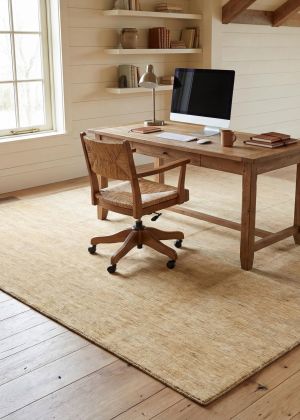
In a home office, the rug should ideally be large enough for the desk and office chair to fit completely on it. This means the chair stays on the rug even when rolled back, and the transitions to the floor look more seamless.

Single office

In a classic office, a rug that frames the entire workspace is recommended. This creates a clearly defined working area while also providing greater comfort and a more pleasant feel to the room.

Meeting room

Under a meeting table, the rug should be large enough for chairs to remain fully on it even when pulled back. This not only creates a harmonious overall look, but also provides extra protection for the floor against wear and tear.

Open-plan office

In open-plan offices, larger rugs can visually separate individual work or meeting areas from one another. This creates clearly structured zones without the need for additional room dividers.

The ideal rug size depends on the size of the room and the intended use. The overview below provides guidance for different office settings.

Area of use Recommended rug size Recommendation
Home office 160 × 230 cm Suitable for a desk with an office chair.
Small office 170 × 240 cm Defines the workspace without making the room feel cluttered.
Private office 200 × 300 cm Provides enough space for a desk and office chair.
Meeting room 250 × 350 cm or larger The table and pulled-out chairs should sit on the rug.
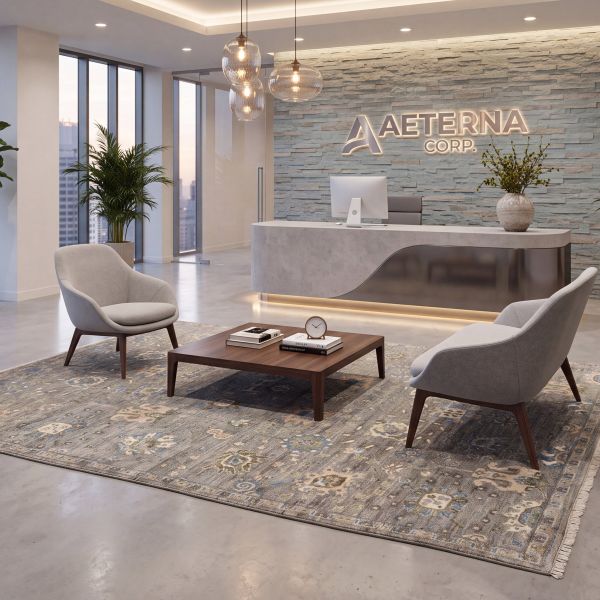
Reception area From 200 × 300 cm Creates an inviting and clearly structured look in the room.

Tip: The rug should be large enough to allow the office chair to move within the workspace without constantly rolling between the rug and hard flooring. This increases comfort and creates a harmonious overall look.

Which oriental rugs are particularly suitable for the office?

Not every oriental rug has the same effect in an office. Depending on the working environment, interior style and level of wear, different types of rug may be the better choice. While some designs impress with their understated look, others add stylish accents or are particularly suitable for heavily used work areas.

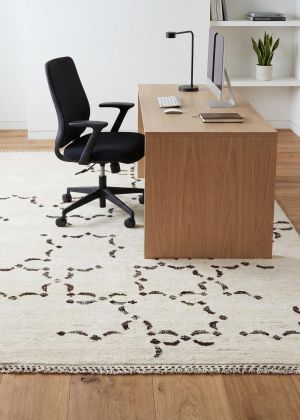
Hand-knotted Gabbeh rug in the home office with wooden furniture

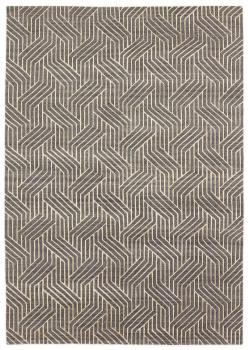
Gabbeh Rugs

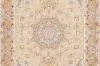
Gabbeh rugs are characterised by their simple designs, warm colours and durable virgin wool. They are particularly well suited to modern offices and home offices where a calm and pleasant working atmosphere is desired.

Hand-knotted Berber rug in a modern home office with desk

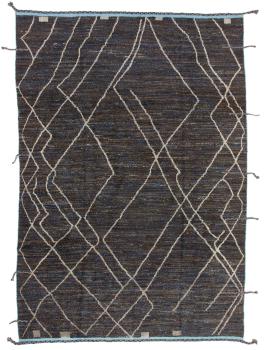
Berber rugs

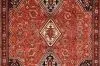
Berber rugs impress with natural shades and timeless patterns. They can be combined in many ways and are suitable for both minimalist offices and modern workspaces with a Scandinavian interior style.

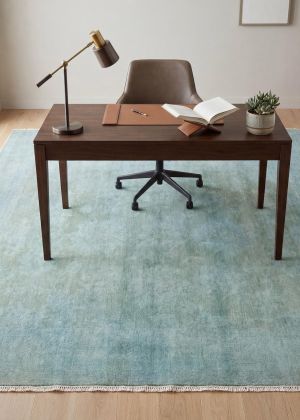
Hand-knotted Ziegler rug in the home office with wooden desk

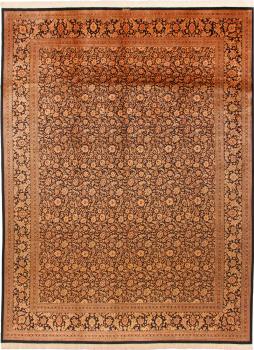
Ziegler rugs

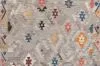
Ziegler rugs combine classic elegance with subtle colours. This makes them an excellent choice for meeting rooms, reception areas or executive offices where a high-quality impression is desired.

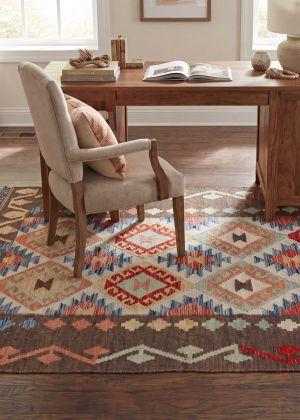
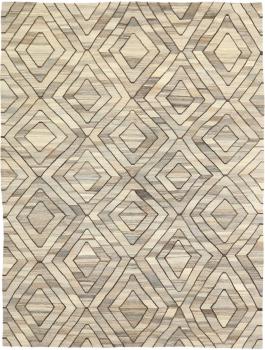
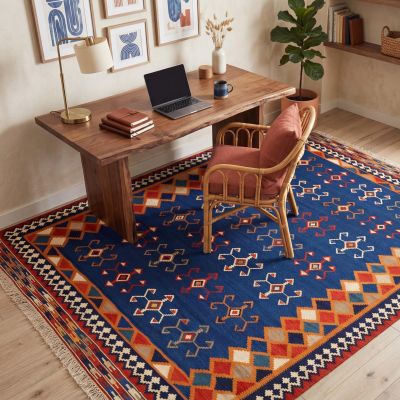
Hand-knotted Kilim rug with geometric pattern in the home office

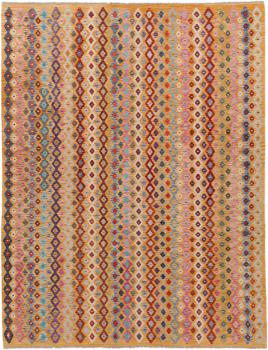
Kilim rugs

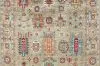
Kilim rugs have no deep pile and are flat-woven. This makes them particularly suitable for areas where chairs are moved frequently or where an easy-care solution is needed.

Which rug colour suits the office?

The colour of a rug influences the feel of a room. In the office, it should suit both the interior style and the desired atmosphere. Light shades create an open and welcoming look, while darker colours add more depth and elegance.


Colour Effect in the office Suitable for
Beige & Cream Light, welcoming and timeless Home offices and small offices
Grey Modern and professional Companies and open-plan offices
Blue Calm and balanced Private offices and meeting rooms
Green Natural and harmonious Home offices and creative workspaces
Dark Red Elegant and prestigious Reception areas and executive offices

Tip: Choose a rug colour that complements your existing furniture and flooring. This creates a cohesive overall look and means the rug can still be integrated easily if you redesign the space later on.

Office chair on the rug – what should you look out for?

A rug in the office adds comfort and creates a pleasant feel in the room. However, to ensure an office chair can move easily and the rug stays looking good for a long time, there are a few points to keep in mind.

Pile height

For workspaces with an office chair, rugs with a low to medium pile are particularly suitable. They allow easier movement on castors and are less affected by daily use.

Material

Robust natural materials such as pure new wool are durable and retain their shape for a long time, even with regular use. At the same time, they offer a pleasant feel and help create a comfortable indoor climate.

Rug underlay

A non-slip rug underlay prevents the rug from shifting when the office chair is moved. At the same time, it protects both the rug and the floor and improves safety in the workspace.

Castors for office chairs

Soft castors suitable for hard floors can reduce the strain on the rug. This allows the chair to move more smoothly and helps protect the rug.

Tip: If the office chair is used daily for many hours, a rug with a flatter pile is recommended. This is the best way to combine comfort, functionality and durability.

Modern study with an oriental rug in warm brown and copper tones

How to keep your rug looking beautiful for years

Oriental rugs are durable, no question, but they do need a bit of care. Here are a few simple tips:

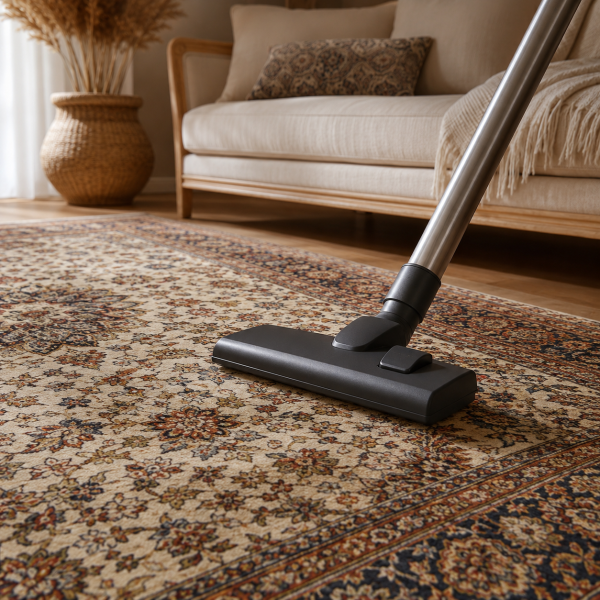
  • Vacuum regularly: Especially in busy offices with lots of foot traffic.
  • Air it out or beat it occasionally: This helps keep the fibres fresh.
  • Stains? Don’t rub! It’s better to have it professionally cleaned if the stain is stubborn.

One more tip: Rotate the rug slightly every few months – this helps distribute wear more evenly.

Common mistakes when choosing an office rug

An office rug should make everyday working life more comfortable while lasting for many years. With the right choice, typical mistakes can be avoided from the outset.

The rug is too small

A rug that is too small can make the workspace look unsettled and often only fulfils its function partially. A better choice is a model that fully frames the work area.

The material is not suitable for the intended use

Depending on the intended use, different materials may be suitable. For busy offices, robust and easy-care rugs are ideal, while in a home office, softer qualities can also be a good choice.

The pile height is underestimated

Very high pile heights can make it difficult to roll an office chair. In work areas, flatter or medium-pile rugs are therefore usually the more practical solution.

The colour is chosen solely according to taste

As well as personal preferences, the rug colour should also suit the interior, the flooring and the lighting conditions. This creates a harmonious overall look.

No rug underlay is used

A suitable rug underlay increases safety, prevents slipping and protects both the rug and the floor from additional wear.

Tip: If you consider the size, material, pile height and intended use before buying, it is easier to find an office rug that is both practical and visually appealing in the long term.

Frequently Asked Questions about Office Rugs

Which rug is best suited to an office?

For offices, hard-wearing rugs made from pure new wool or flat-woven designs are particularly suitable. Which type of rug is the best choice depends on how it will be used, the size of the room and the desired interior style.

What size rug should I choose for under a desk?

The rug should be large enough for the desk and office chair to fit completely on it. This keeps the workspace visually cohesive and allows the chair to move comfortably.

Can an office chair roll smoothly on a rug?

Yes. Rugs with a low or medium pile are generally well suited to workspaces with an office chair. A non-slip rug underlay also provides extra stability.

How do you clean an office rug?

Regular vacuuming and the prompt removal of stains help to keep the rug looking beautiful in the long term. Depending on the material, professional rug cleaning may also be advisable.

Carpet Office

Is an elegant and practical addition to any office. It not only enhances the look of the workspace, but also offers comfort, durability and a touch of culture and history. Incorporating such a rug into your office will not only transform the ambience, but also create an atmosphere of professionalism and good taste. With the right care, an oriental rug can be a valuable investment that will enhance your workspace for many years.

Further inspiration

Close-up of a modern Gabbeh rug in dark design with fine patterning.
Cosy classics

Gabbeh

Living room with a summery kilim rug in vibrant colours.

Summery kilim rugs

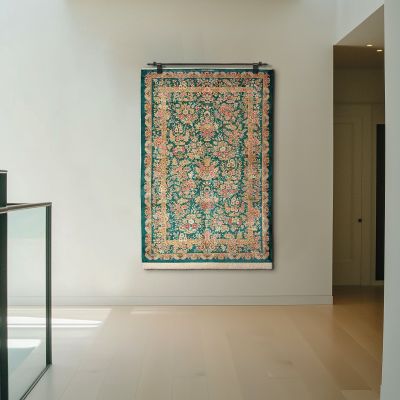
Oriental rug in traditional medallion design as wall decoration

Back in fashion: Oriental carpets on the wall